いけばなの基本
2026.07.09
生花(しょうか)という様式が生まれたのは江戸時代中期のこと。当時いけられていたのは、日本の野山に自生する草花でした。すすきや女郎花、桔梗といった、その季節の野辺にごく普通に咲いている花たちです。
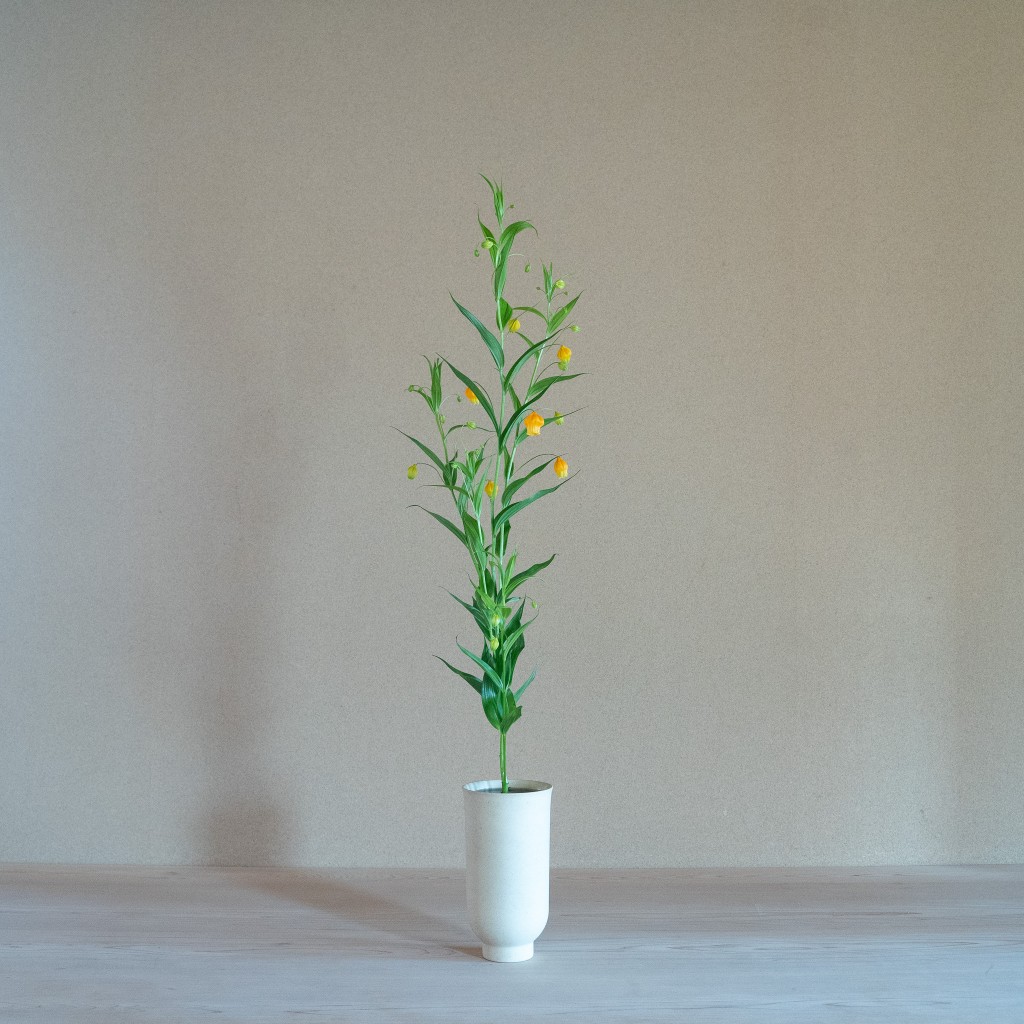
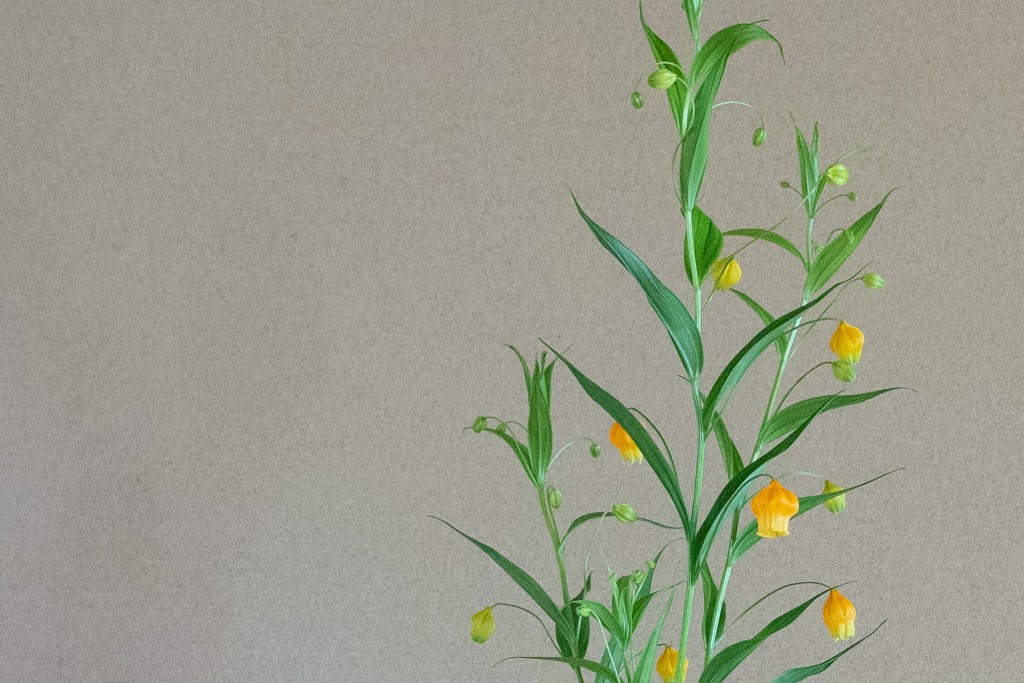
けれど時代は巡り、いまでは世界中の植物が花材として手に入るようになりました。このサンダーソニアも、もともと日本にはなかった植物です。南アフリカを原産とするこの花は、提灯のような可愛らしい黄橙色の花を、すっと伸びた一本の茎に連ねて咲かせます。
生花の様式は江戸の昔から変わらずここにありますが、そこに生ける花は、こうして遠い国からもやって来る。伝統というのは、案外しなやかなものなのかもしれません。
The shoka style began in the mid-Edo period. Back then, people used wildflowers that grew naturally in Japan’s fields and mountains — plants like pampas grass, maiden flower, and balloon flower, all common blooms found in the meadows of their season.
Times have changed, though, and now flowers from all over the world are used. This Sandersonia is one of them — it didn’t originally grow in Japan at all. It comes from South Africa, and it grows small, lantern-shaped flowers in a lovely orange-yellow, lined up along one tall, slender stem.
The shoka style itself hasn’t changed since the Edo period. But the flowers placed within it now come from far-away countries. Tradition, it seems, can be more flexible than we think.